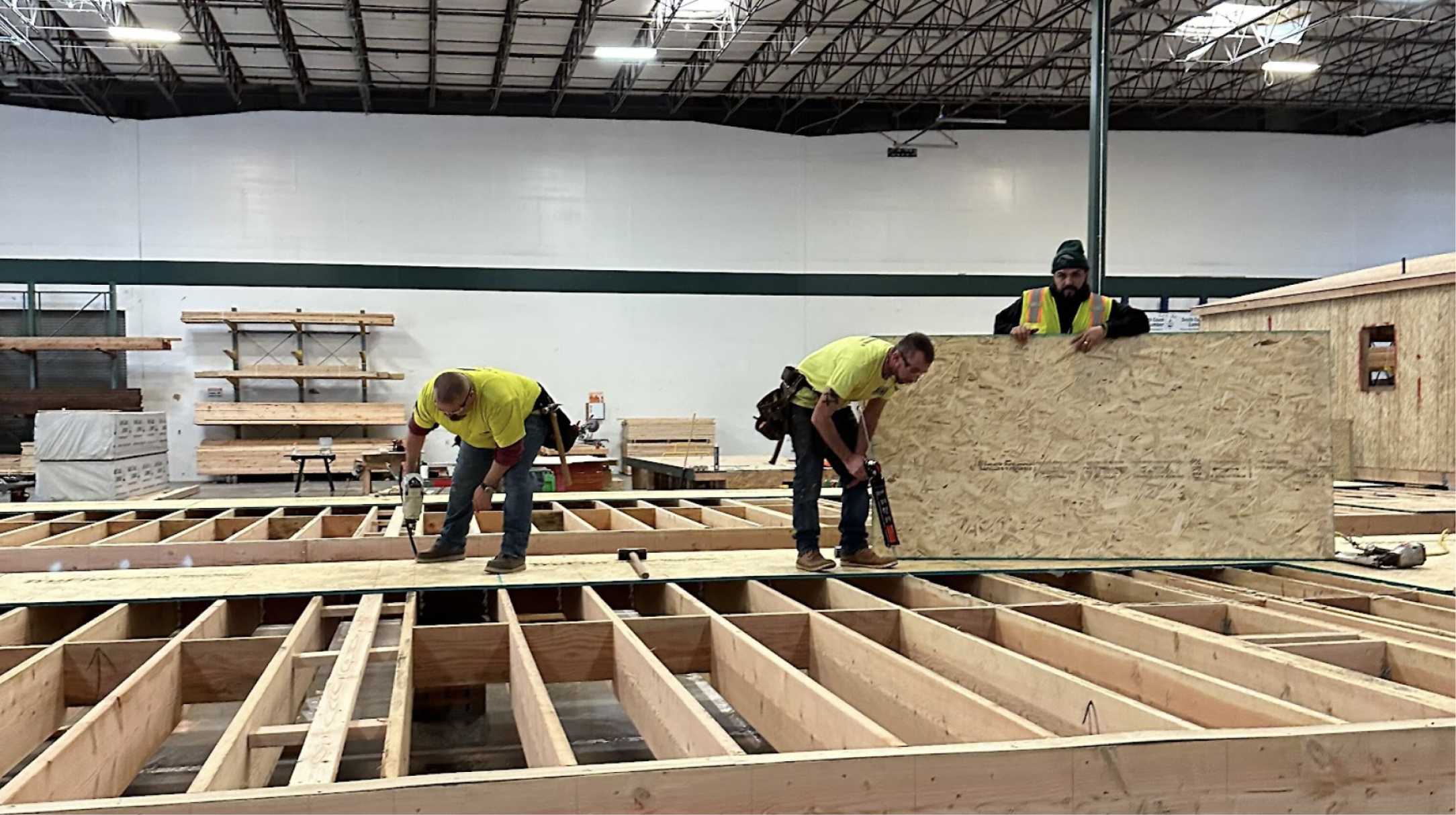
As the prefab and offsite construction industry continues to grow rapidly, an industry wide problem is emerging on how to hire the right talent at the right time. The goal is to staff your factory and manage your capacity and production pipeline to ensure your factory is operating year round efficiently without downtime. Downtime can be extremely costly and having to let go of your trained workforce or furlough employees between projects can prevent your prefab business from retaining labor, a major competitive advantage in the labor constrained construction industry.
In this How To Guide, we walkthrough how to leverage the full functionality of Offsight’s Pre Production feature set to accurately plan out a full year of factory production, identify factory downtime and opportunities to fill production pipeline, and correctly staff your factory to run efficiently year round.
Building Your Factory Production Schedule
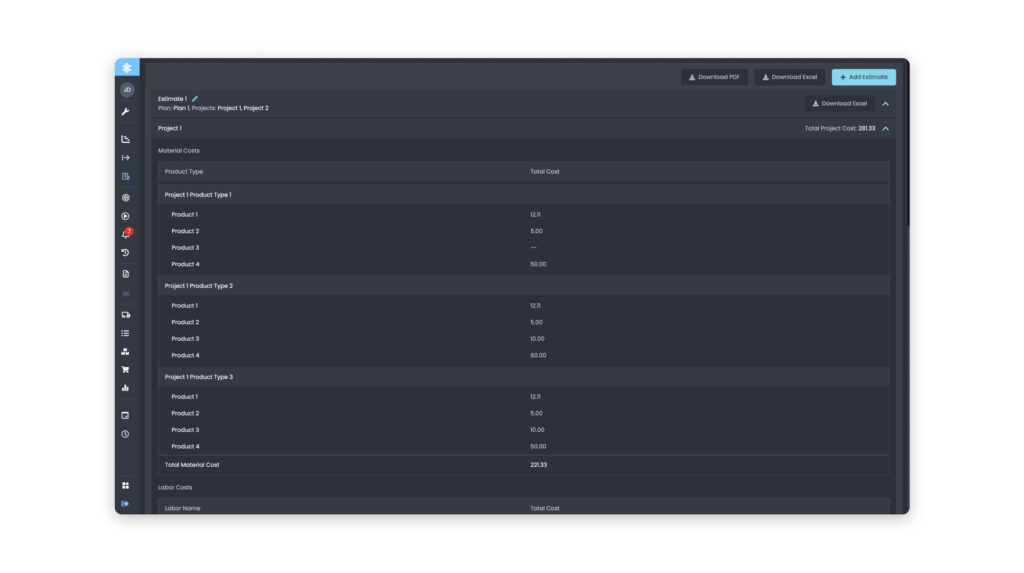
To build your factory operating plan, we turn to Offsight’s Planning Dashboard. In this dashboard, you can define a new production plan by creating a project or multiple project phases with a target start date. You can define your products by first adding the product types that will be assembled (e.g. interior panels, exterior panels, bathpods, volumetric modules, etc) and the order in which each product will flow through production. For each product, you can define the zones or process steps and how long each zone or process should take to complete.
Once all products are added to each project, you can define labor capacity by assigning the initial labor resources (framers, welders, technicians, etc) to staff your factory and define their expected start date and the zones or process steps in your production workflow where they will be working.
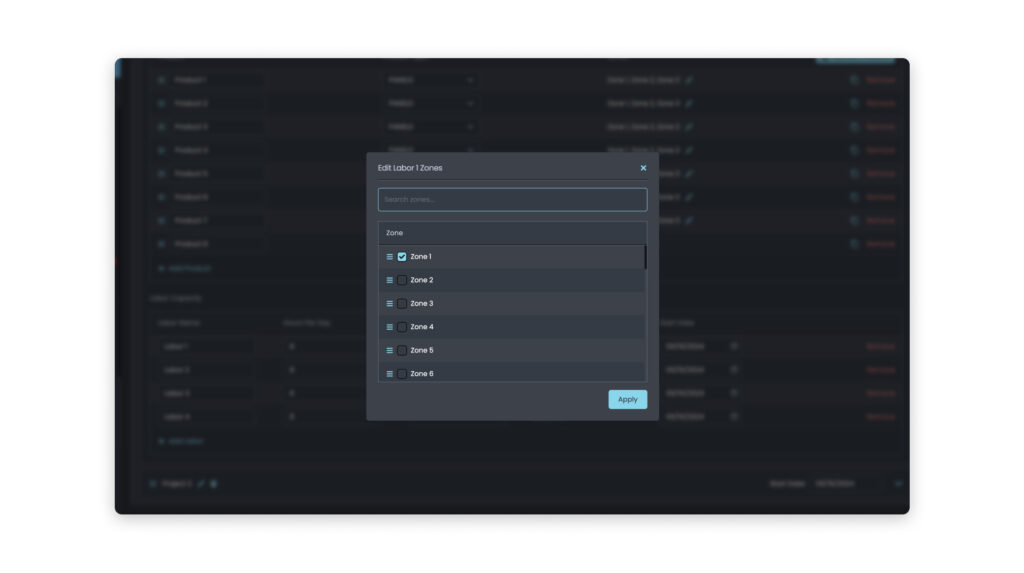
Furthermore, Offsight’s Configured Templates offer pre-existing project templates, which can save you a lot of time in your planning process. Once all current projects in your pipeline are added to your plan, Offsight’s algorithm Generates a full production schedule and forecast plan with target start dates and end dates for each product. This forecast will have duration times for each project and how long it would take to assemble each product. Project schedules and timelines can be accelerated or manipulated accordingly by adding or subtracting labor resources, changing factory hours or improving process time requirements for assembly.
Identifying Capacity Gaps
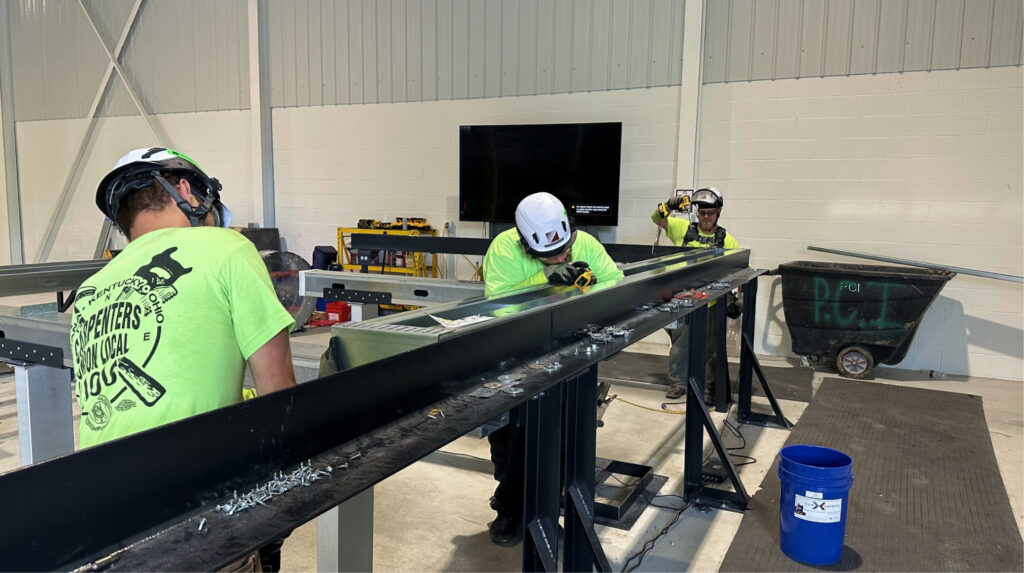
Once your factory operating plan is generated, Offsight’s Planning KPI Dashboard identifies where you have factory downtime or gaps in projects or production. Offsight’s dashboard will also provide open project capacity with total days of downtime and also identify start and end dates for periods of no production activity.
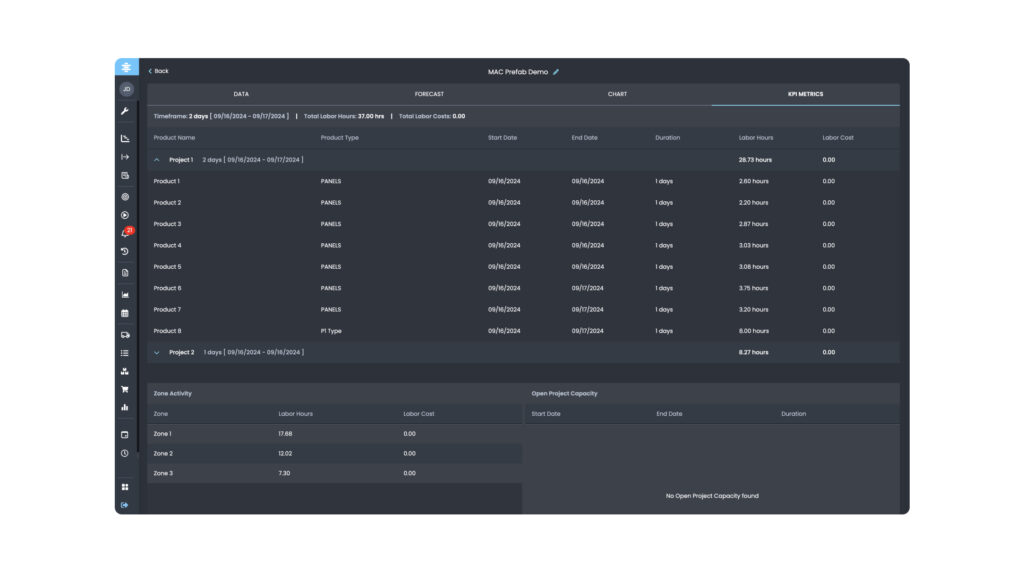
To fill these demand gaps, you can easily share your dynamic operating plan with sales and front office staff to help them identify where they can book or move client projects and optimize factory capacity. This helps you plan your year round production schedule better and avoid factory shutdowns. These demand gaps can also be shared with your customers to better coordinate across multiple project phases such as shipment schedules and onsite installation for major commercial projects.
Understanding Labor Constraints for Hiring
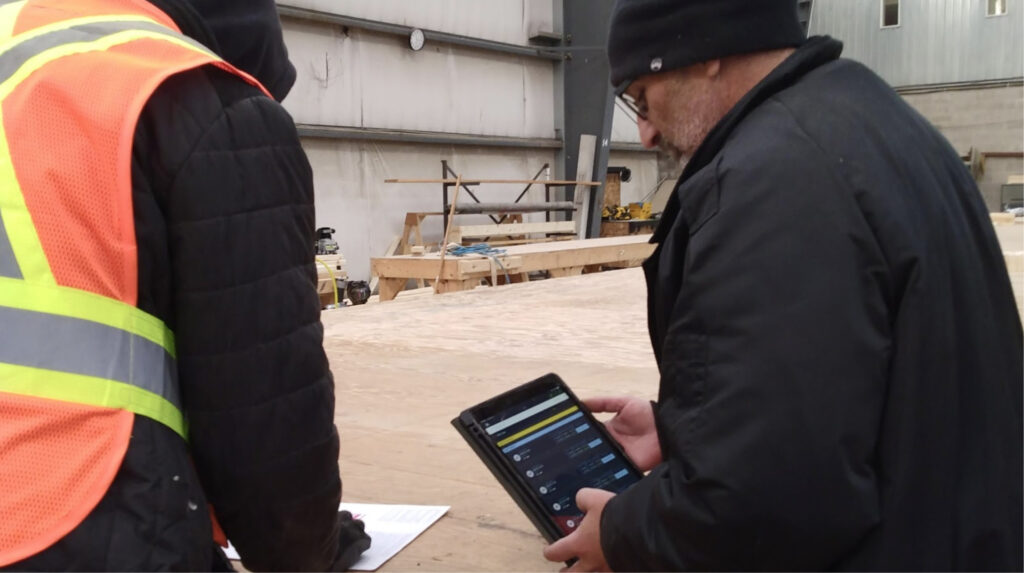
Once your plan is generated, Offsight will provide a full breakdown of the total labor needed for each project and product and their cumulative labor cost. Offsight also provides a summary of the total labor cost by zone or process to ensure each workstation in your factory is staffed appropriately. In order to accelerate your project schedules you can hire additional labor resources and assign them to specific workstations or processes. Furthermore, you can track improvements in labor productivity and should you find that your workforce is capable of completing assembly processes or tasks faster than expected you can adjust your projections and Offsight will instantly update the forecast and reflect the schedule changes across your plan.