
Jason Dixon
The goal of running any successful prefab operation is actively managing your materials costs on current projects, accurately tracking these costs to improve and optimize for future projects, and managing your materials ordering, delivery, and installation process to avoid costly factory downtime.
In this edition of the How To Guide for Prefab Leaders, we walk through how to easily address these core essentials with Offsight’s Materials and Inventory Management feature set. We review how to build your processes and workflow in Offsight to make your material management seamless and scalable.
Managing Material Costs On Active Projects
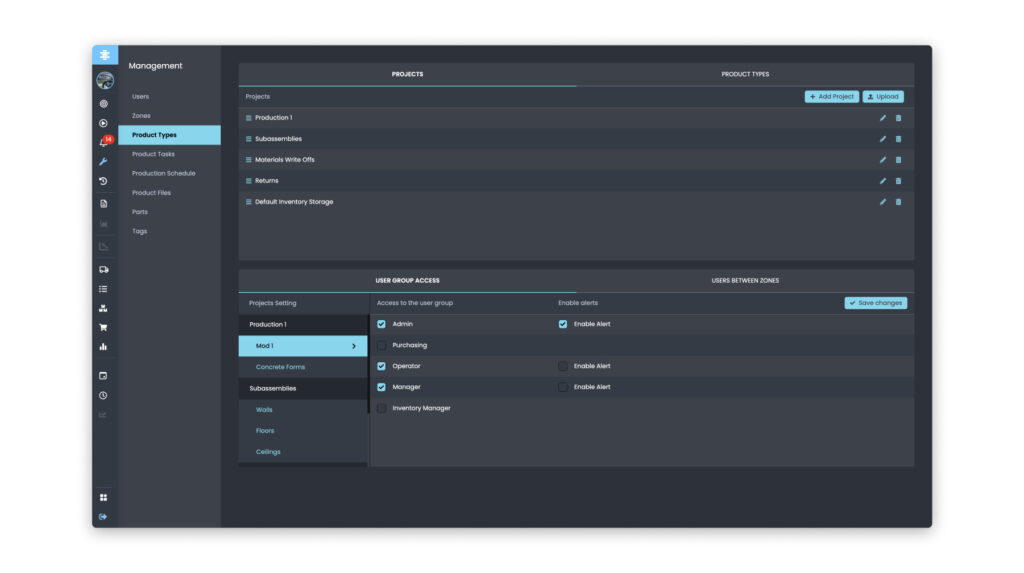
Through Offsight’s Materials and Inventory Management feature set, prefabricators can build out their manufacturing workflow and full bill of materials (BOM) by project or specific product design for engineer-to-order. Whether the fabricator is manufacturing fully volumetric modules, pods, panels, or other building components, we can use Offsight’s Management Tool to identify the type of product we are building and create unique Product Types that correspond with your designs (e.g. Panel Design A, Panel Design B, Panel Design C).
We can then associate a custom bill of materials for each design or if it’s made to order, we can associate a bill of materials with each specific product design. Many products can be linked with your overall active project to provide highly accurate real-time material costing.
Through Offsight’s Materials & Suppliers dashboard, we can easily link material suppliers, part IDs, and part pricing with your bill of materials. Additionally, purchase orders created for each part will update the pricing to reflect changes across the system and allow for very accurate material costing during projects.
Once your project launches, capturing real-time material costs and consumption directly from the shop floor can be done seamlessly through Offsight’s mobile app. Operators can easily identify and select the specific product they are working on and see its bill of materials for that specific process or station. They can then record material consumption at the moment as they are assembling the parts. During this process, if there are parts that are installed incorrectly or damaged during assembly they can be recorded as waste material.
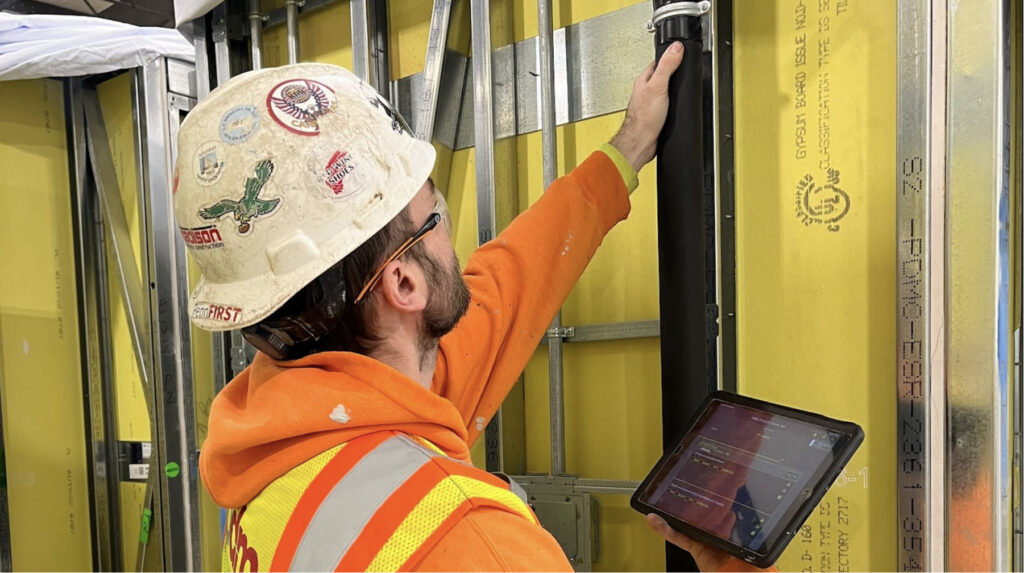
By tracking your material consumption in real time across all live products on your shop floor, Offsight provides real-time tracking of material costs on active projects. This provides you with the ability to proactively manage your overall project budget and material costing.
Avoiding Downtime With Streamlined Material Ordering
In addition to tracking material consumption, Offsight’s Materials and Inventory Management feature set allows prefabricators to effectively manage their entire factory inventory, materials ordering, and materials receiving as their inventories run low.
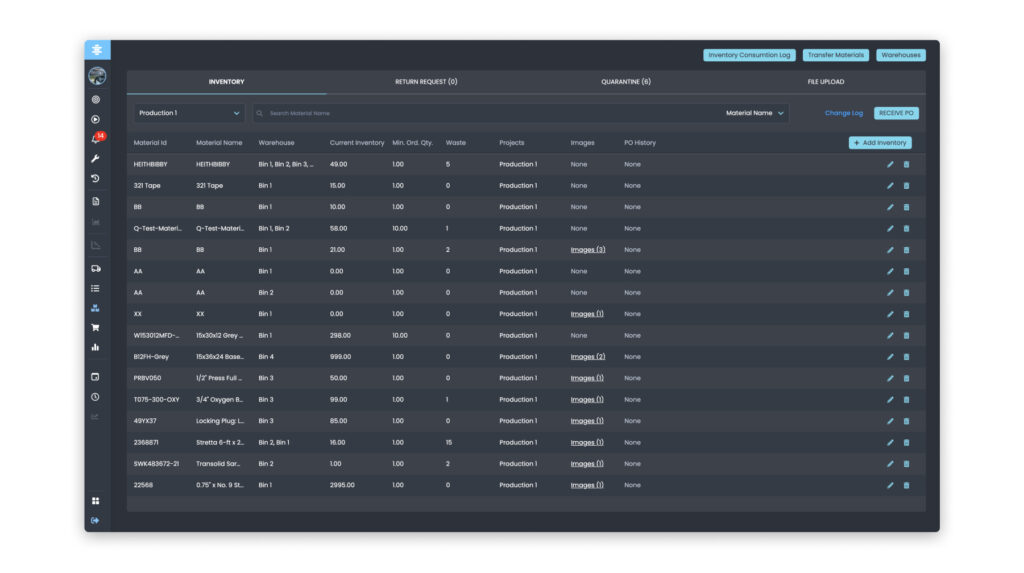
Through Offsight’s Workflow Automation functionality, prefabricators can set up automated alerts that would go out to materials managers and other personnel as parts run low. Minimum quantity threshold alerts can be defined per part and as these parts are consumed during assembly and these thresholds are triggered, managers will receive live notifications and emails through Offsight’s alerting system to re-order more parts.
A major advantage of the material ordering workflow in Offsight is the entire process can be connected and managed within one solution. Once parts run low, materials and procurement managers can log into Offsight’s Order dashboard to immediately create Purchase Orders for specific parts. Since all suppliers, part IDs, and BOMs are already loaded in Offsight, managers can seamlessly select parts low on quantity and generate POs. Managers can also send POs through Offsight to their suppliers or can download the PO as a PDF to send externally.
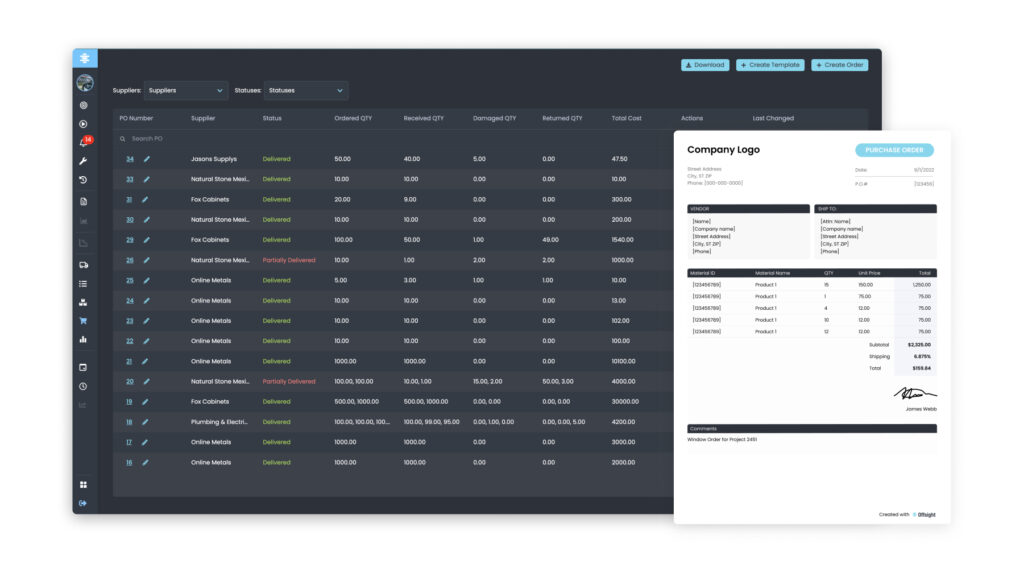
Once POs are created, they are assigned a status in Offsight’s dashboard and can be tracked through shipment, receipt, and ultimately receiving once they are ready to be added to inventory. During the receiving process, warehouse managers can identify if the correct number of parts arrived or if there are any defects or damages and can seamlessly “quarantine” these parts whereby they would be held and returned to the supplier.
A running record of all parts with damages or defects by part ID and supplier is stored in Offsight for future reference and to evaluate supplier quality.
Optimizing Material Costs & Improving Prefab Efficiency
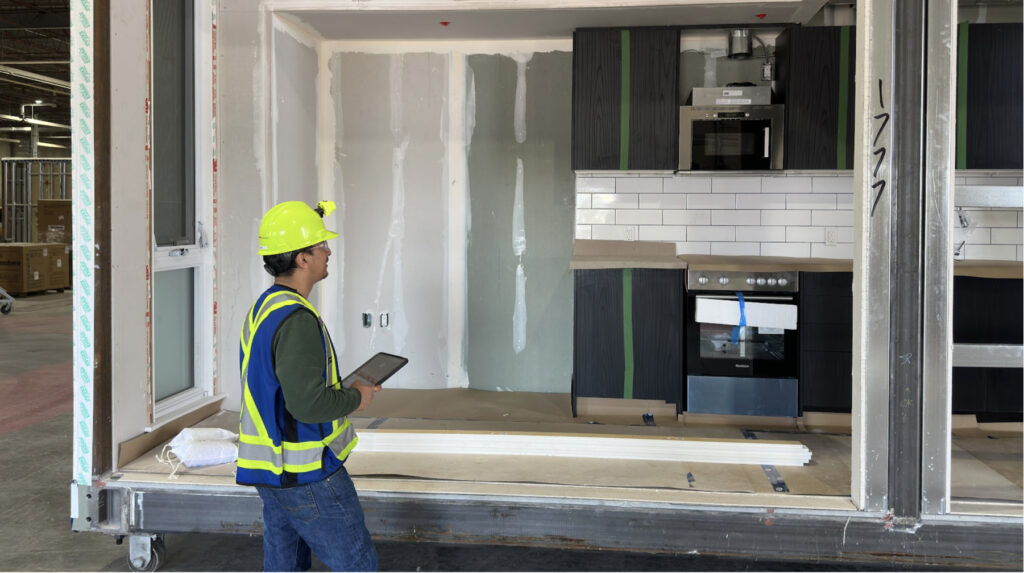
A major value add of leveraging Offsight’s Materials and Inventory Management is the ability to improve and optimize material costs on future projects and to improve your prefab materials management and operations overall. As outlined earlier, Offsight allows prefabricators to track both material damages and defects at the point of receipt and material waste at the point of assembly on the floor.
By understanding which parts commonly arrive damaged or defective, prefabricators can optimize their designs and corresponding bill of materials on future projects to limit these overhead costs related to material shipment and handling. If necessary certain parts or unreliable suppliers can be swapped on future projects.
Furthermore, being able to record which parts or processes commonly result in material waste on the floor, and being able to identify the root cause of this waste, can provide a significant opportunity for improving overall prefab operations. Recording and identifying, in Offsight, which parts are commonly damaged during manufacturing and improving standard operating procedures for assembly and installation of these parts on future projects will greatly cut down on overall material costs and rework.