
Jason Dixon
Tracking, Managing and Optimizing Labor Costs on Prefabrication Projects
Prefabricators who are actively investing and growing their factory operations are well aware of the importance of managing labor costs for the overall success of their projects. This can be the difference between delivering on the speed and cost efficiency advantages of prefab and offsite construction.
In this case study, we will review how specialty contractors and offsite manufacturers who may produce upwards of 1000 panels, pods, and other prefabricated components on major projects can leverage technology and process optimization to accurately track and control labor costs on their projects. By following these guidelines, prefabricators can set their businesses up for success and implement the tools to drive continuous improvement.
We analyzed a specialty contractor that prefabricates 2 types of panel designs, interior and exterior panels. On a given project there could be upwards of 500 interior panels and 500 exterior panels. We will assume for simplicity’s sake even though there may be design differences between any 2 panels that the interior panels are relatively similar and their assembly is relatively consistent and that the exterior panels are also relatively similar and their assembly is relatively consistent.
Fixing The Problem
To optimize labor costs on a major project, prefabricators must first accurately measure and estimate these costs on a handful of panels. This process of establishing a baseline estimate for your total project labor cost can be made much easier with technology.
Through Offsight’s Labor Tracking & Timesheets feature set, prefabricators can begin by defining their production or assembly process, adding laborers/manpower, and then tracking their labor across several products to extrapolate and arrive at a total project labor cost.
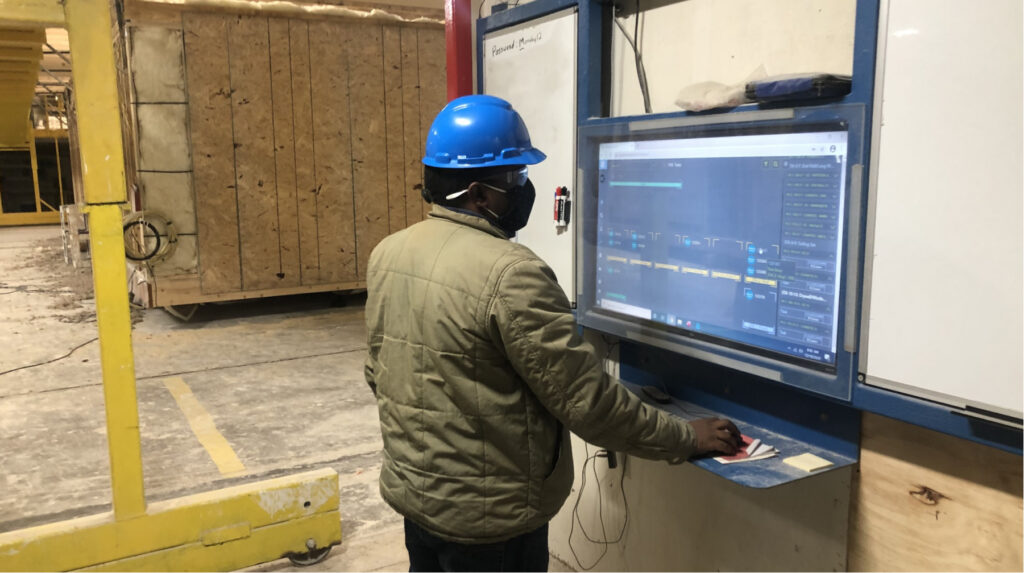
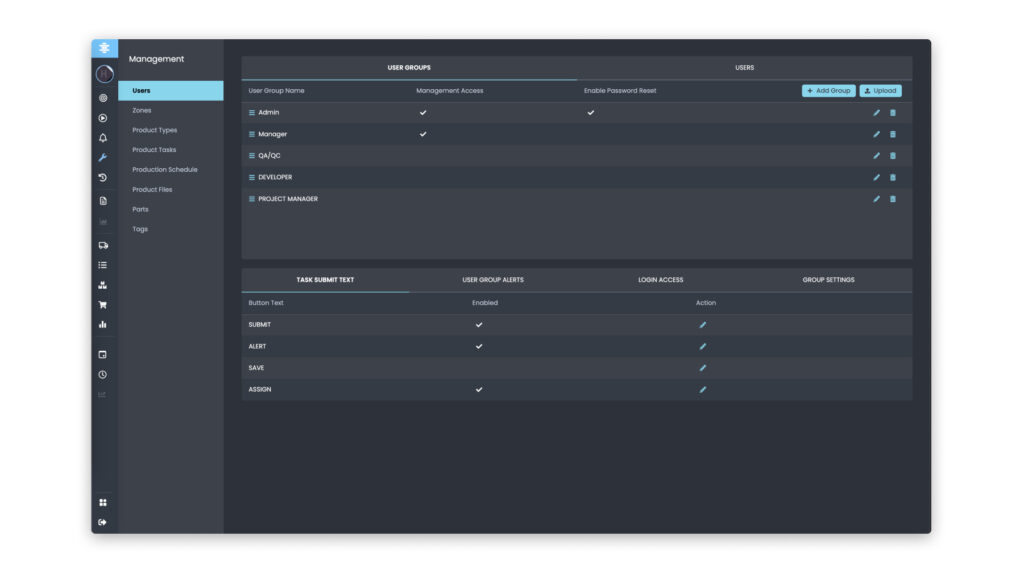
In keeping with our specialty contractor case study, we can assume this specialty contractor has 10 workstations, which can include stations like Framing, Sheathing, Insulation, Sizing, Base-Coat, Paint, Final QC, etc. Through Offsight’s Production Tracking feature, the specialty contractor can create these workstations, identify how interior and exterior panels will flow through their respective workstations, and then add labor resources and personnel who will work in these stations. In the case of this specialty contractor, we can assume there are 20 labor personnel, roughly 2 laborers assigned per station. Through Offsight’s Management Tool, the specialty contractor can define specific User Groups and roles (e.g. welders, framers, drywall installers, etc.) and assign hourly costs to these workers.
Once the production process, workflow, and personnel have been added to Offsight the specialty contractor can then load all 1000 panels, with individually marked Product IDs and QR Codes from the project to Offsight’s Production Schedule. They can also set Shift Times in Offsight to define when labor personnel would be actively working in the plant and when they will be off the clock.
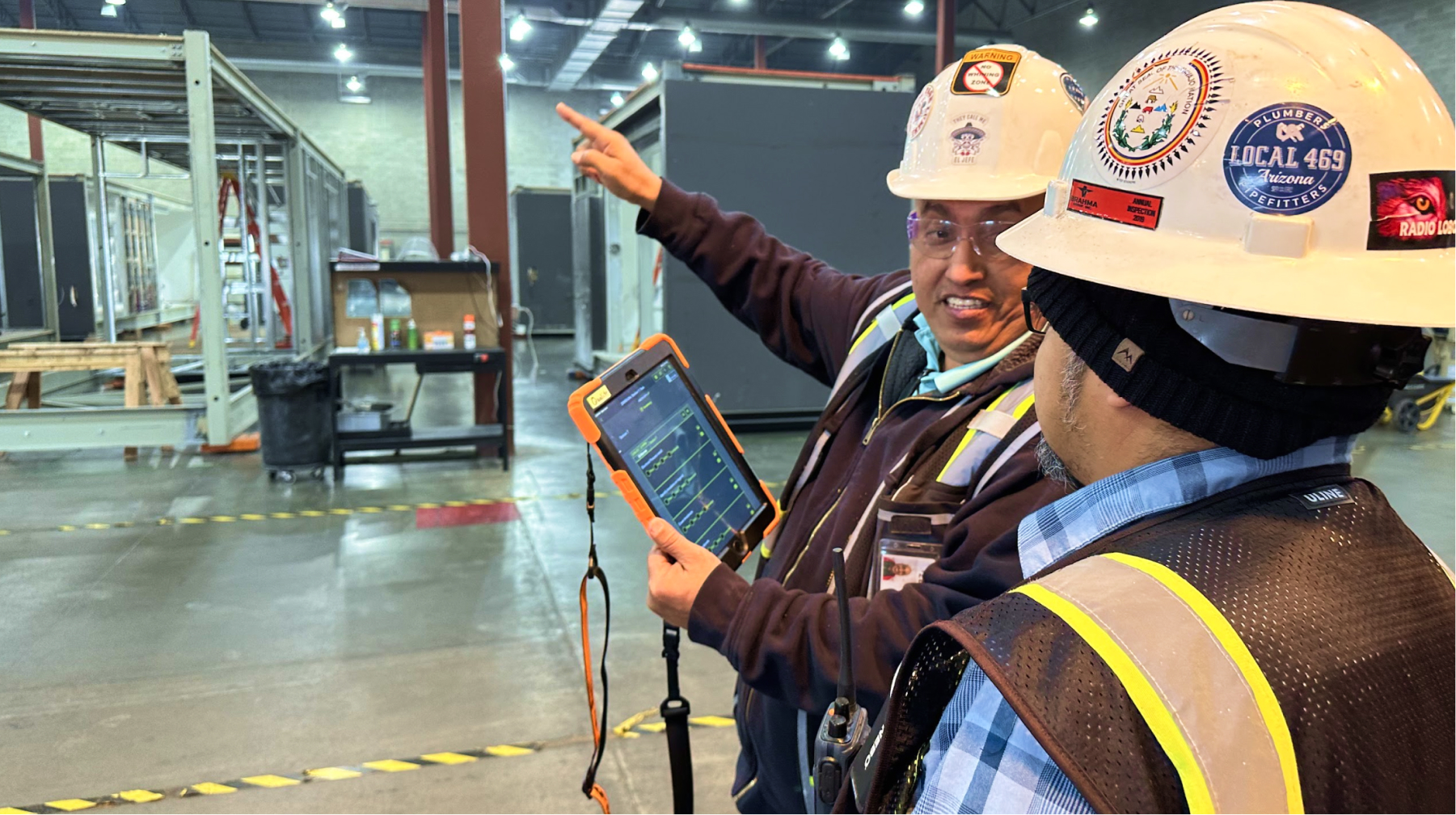
After these parameters are set, a process can be established to begin tracking and baselining the initial estimate for total project labor cost. The contractor can leverage Offsight’s labor tracking feature set and ensure that mobile devices such as tablets are available at each workstation to track labor costs on the panels.
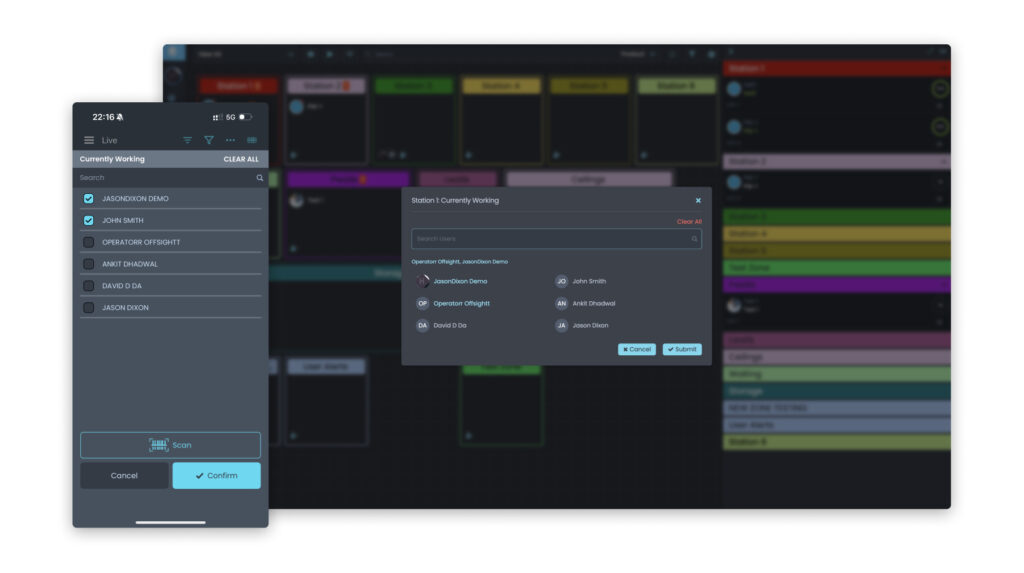
Once production begins factory operators or team leads overseeing operators will need to leverage Offsight to clock in and out of specific panels and workstations. This process if done across all 1000 products, for a relatively high volume production process, may be very cumbersome. Therefore, it is usually best practice to clock operators in and out of a workstation and allow Offsight to automatically track panels as they pass through. Alternatively, we can also arrive at a highly accurate approximation of total project labor cost based on an analysis of a subset of panels.
For example, a time study can be performed on 10 interior panels and 10 exterior panels to establish a baseline for total project labor cost. As these panels pass through each workstation, operators will need to clock in and out of each panel to record their time spent on that assembly activity and in that work area. The clocking in and out can be done in Offsight either manually by selecting the panel or by scanning a unique Offsight QR code for the panel and a QR code on the operator’s badge. This process can be managed by individual operators or by team/station leads to reduce errors and prevent downtime during production.
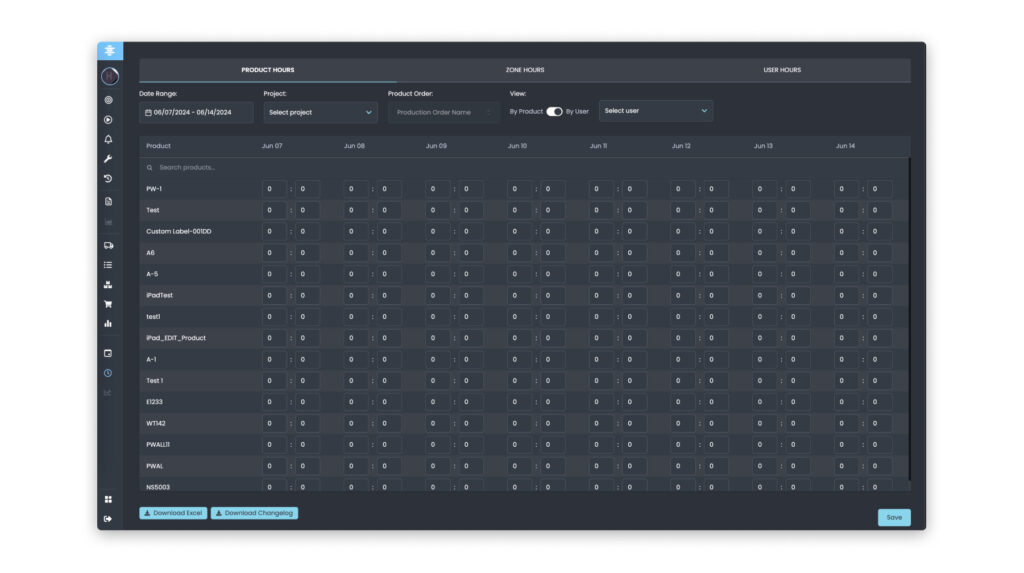
Once all 10 interior panels and 10 exterior panels complete production, the contractor can access their Time Log in Offsight to see a highly accurate chart of time spent by the operator on each panel. Labor hours can be broken down by panel, by station, and by worker. In Offsight’s dashboard, we can average the total labor hours and labor costs across each of the 10 interior panels and each of the 10 exterior panels. We can then extrapolate the average labor hours and average labor cost per interior and exterior panel across the entire project of 500 interiors and 500 exterior panels to arrive at a baseline total project labor cost.
Capturing The ROI of Your Process Improvements
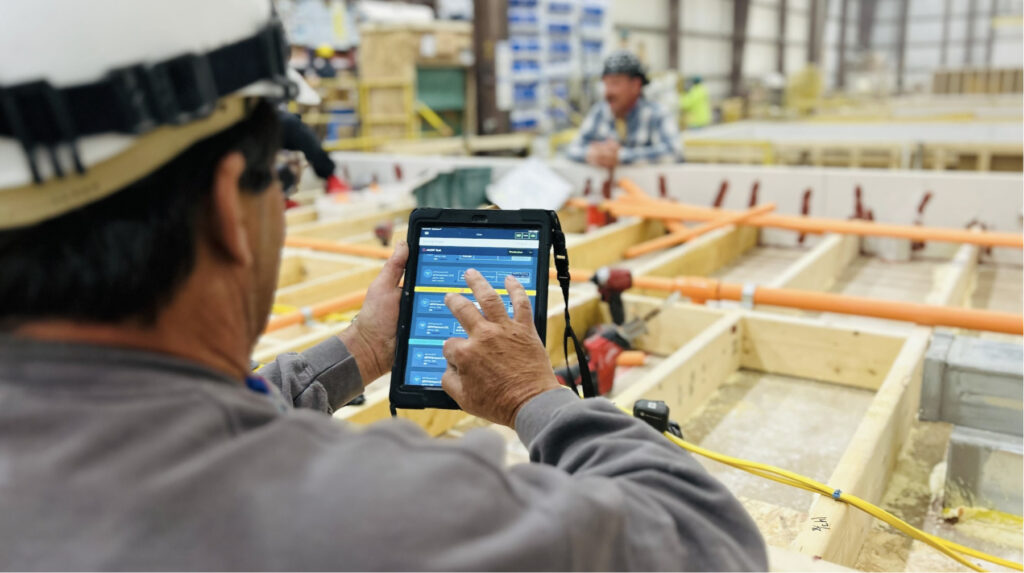
While this case study primarily focuses on a specialty contractor tracking labor and optimizing their process on a single major project, prefabricators who are investing in their offsite and industrialized construction capabilities are driving their business toward an efficient manufacturing process. As such, it is important to regularly and continuously track total labor hours and costs at various points throughout the year and to establish a continuous process improvement program that will work to drive improvements over the long term.
Understanding overall labor costs can also benefit the estimating and bidding process by ensuring project stakeholders have realistic timelines for prefabricated products and are able to understand the costs associated with changing those timelines. For example, if a project owner wants to change the scope of the project by reducing the timeframe to completion, there will be increased labor costs and Offsight can provide a detailed breakdown of where that increase in labor costs would be. Speciality contractors and offsite manufacturers who wish to provide accurate cost estimates and delivery schedules to owners on these projects, can leverage Offsight’s Planning & Forecasting capabilities and include highly accurate labor capacity estimates from the analysis above.
Through the use of technology like Offsight prefabricators can make the most of their investments and implement the programs outlined in this case study to drive internal improvements and set their business up for success.